"£80 moisturiser vs £8 moisturiser: what are you really paying for?"
Is an £80 moisturiser worth it against an £8 one? What sits behind the price and how to choose without overpaying or shortchanging your skin.
 By the GlowPrice team · 16 November 2026 · 2 min read
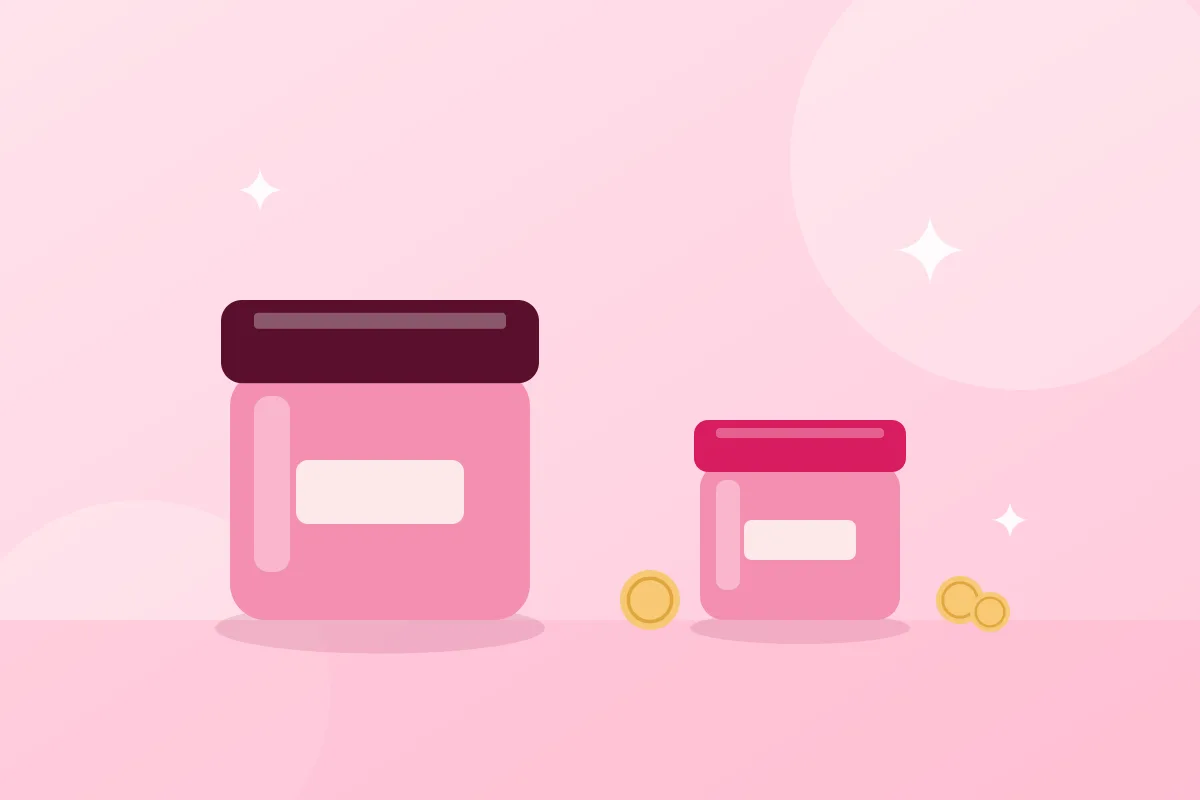
Two face creams. One, £80. The other, £8. Both promise to "hydrate". And there you are in the middle, looking like someone trying to guess which one is the good one.
The short answer: it depends. The long one is more interesting, because almost nobody tells you where a moisturiser's money goes.
Expensive vs cheap moisturiser: what's behind the price
When you buy a moisturiser, you don't only pay for what's in the pot. You pay, in proportions that vary hugely from brand to brand, for:
- The formula: the ingredients and the research behind them.
- The packaging: a heavy jar, a luxe lid, a box with details.
- The brand and advertising: campaigns, ambassadors, the beautiful shop.
- Distribution: the retailer selling it takes its cut too.
You can't tell at a glance how much is which. That's why the price on its own doesn't tell you whether the cream is any good.
What you can look at
- What you want it for. A cream that hydrates and feels good. Not every product has to work miracles.
- How much you get. An £80 cream in 30 ml and an £8 one in 200 ml are nothing alike. Work out the price per 100 ml: here's how.
- How long it lasts. A cream you use daily: does it last a month or a season?
- How it feels on you. The best cream is the one you enjoy using and that doesn't cause trouble.
When paying more can be worth it
- When you love how it feels and that makes you use it consistently.
- When it suits your skin and you've been testing for a while.
- When it works out cheaper per use because you need very little.
When it isn't
- When you're paying mostly for the packaging or the brand and the formula is close to a simpler one.
- When you don't finish it before it expires once opened.
- When you buy it because everybody saw it and you don't need it.
The trick to not overpaying
Compare the same cream in several shops before buying. The same product can cost different amounts depending on where you look, and delivery changes the final sum: on GlowPrice you see it at a glance, with the date we read it. To sharpen it further, here's when the cheapest shop stops being cheapest.
To finish
There are no "good" and "bad" creams just by price. There are creams that suit you and creams that don't. And the one that suits you might cost £8, £28 or £80. What matters is that you choose it, not the label.
Being filter-free also means saying this: some GlowPrice links to stores are affiliate links and earn us a commission if you buy, at no cost to you. They don't change the order or the price we show. This is information about cosmetics, not medical advice: for your skin, talk to a dermatologist or a pharmacist.